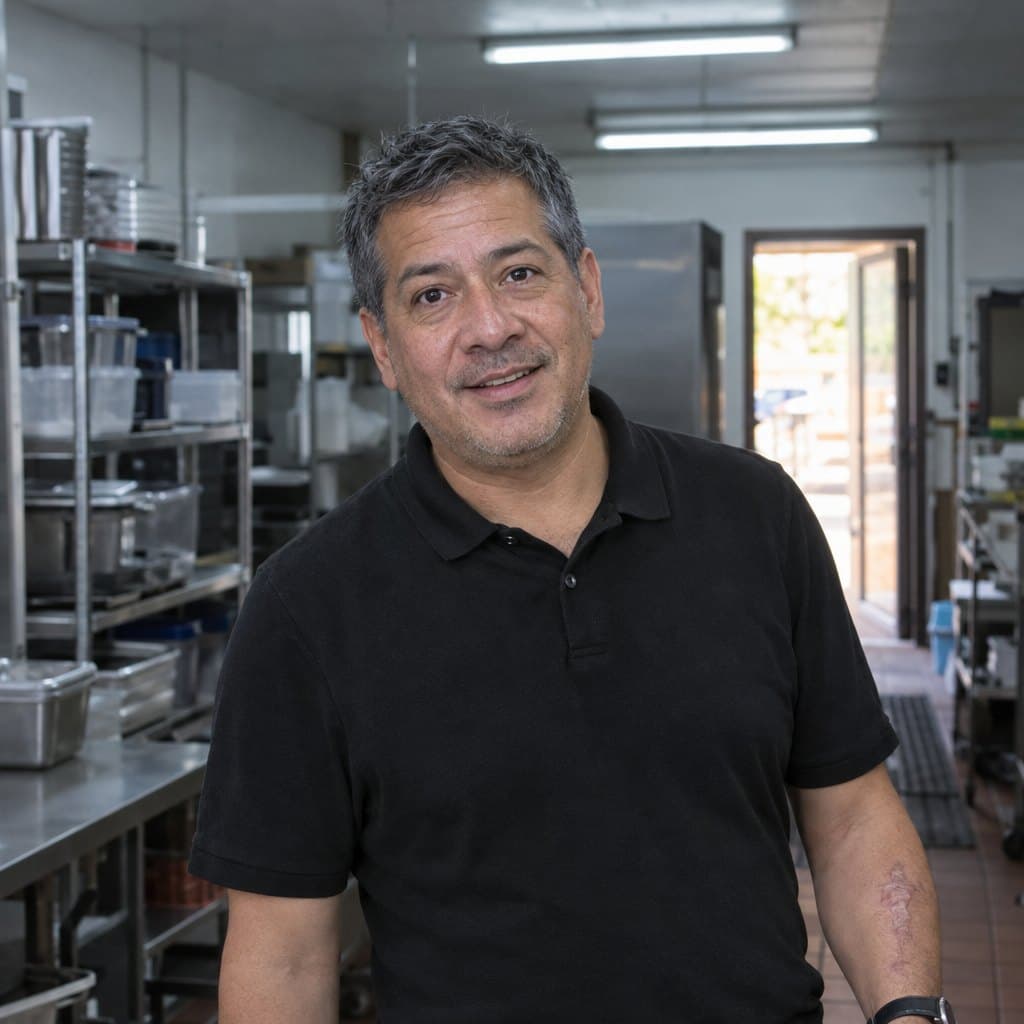
 5 min freeYour first shift


Robert Kessler
Consular officer
Runs rooms pitched at working fluency and confident fluency
American EnglishFace to face, no screen between you, from Arlington, VAEvery time like the first
5.0(3)
From 5 min
A session of any length
First 5 minutes free
In Robert’s words
Robert sees a hundred and twenty people a day through a window with a microphone.
He has about three minutes each, and his questions are short because his time is. He does not smile, not to intimidate you, but because he stopped noticing twelve years ago. He will ask the same thing twice in different words and he will notice if the answers differ. He wants four things in one sentence each: why you are going, for how long, who is paying, and what is waiting for you at home. Every extra detail you volunteer is a new question he now has to ask. He never says how it went; he says 'thank you' and calls the next number. Nothing in this rehearsal predicts an outcome. It trains the conversation.
1min
They speak first, about a second after you press start. There is no press-to-talk and no waiting for your turn.
4min
Four minutes of the real thing, at the real pace, with the interruptions where a real one would put them.
1min
Your pace, your pauses and your filler words are counted within a second, and the score follows. Nobody asks for a card to hear it.
What a score from Robert is worth
How the score is worked out here
Three things, and you can read what each one actually means. None of them turn this into an exam: talk to this person as often as you like, and the score is there only if you want it.
Run on Robert
Cleared
Published criteria
The criteria and their weights are visible before you speak.
- Here
- Publicly documented interview structure: purpose, duration, funding, ties, short questions, no explanations, no verdict at the window.
- Held by
- Published in advance; changes go through review
- Method
- Before you speak you can see what is being measured and how much each thing is worth, as percentages that add up to a hundred. That is checked automatically: a set whose percentages do not add up never reaches the site.
Situations and levels
What Robert runs, and what a fortnight of it costs
A minute costs the same whoever you talk to: the expensive part is the model, not the person. Move the sliders to match the two weeks you actually have.
Situations
Difficulty
What it costs to rehearse this properly
Three runs across a week is what changes an answer. Move the sliders to your own plan. Nothing renews, and nothing is charged until you buy minutes.
- Minutes of talking in total
- 30
- The same conversations with a native speaker
- $300
- You save
- $287
- You pay
- $13
Ratings
What 3 people made of Robert
Every one of them finished a conversation with Robert before they could leave a rating. One conversation, one rating — the rule is in the database, not in a form. That is why the number under the stars means something.
5.0
3 ratings
- 53
- 40
- 30
- 20
- 10
Every one left after a session with Robert
I volunteered one extra detail and immediately got another question about it. That alone changed how I will answer at the window.
After a session with Robert
1 person has talked to Robert, rated it and written about it. Ratings left through the product will join these, and only a finished conversation can leave one.
Compared with a live native speaker
22 conversations with Robert for the price of one with a native speaker
Talking with a live native speaker is the best practice there is, and it is priced like it: from $50 a conversation, at a time that suits them. Here a conversation costs $2.20, starts when you press the button, and can be had again tomorrow.
A conversation with a native speaker
$50
A conversation here
$2.20
Nothing to book, and the same conversation can be had as many times as you like.
| A live native speaker | Reallang | |
|---|---|---|
| What one conversation costs | From $50 | $2.20 |
| When you can talk | When they have a slot | Now, or at six in the morning |
| Who is across the table | The same person every time | A recruiter, a doctor, a neighbour: 56 people |
| Will they interrupt you | Rarely. You are the one paying | Yes, like in real life |
| Feedback in writing | Usually none | 60 seconds later, quoting you |
| A real person across the table | Yes | No, an AI person |
The last row is the honest one: a real person is a real person, and nothing replaces that. But getting comfortable speaking takes dozens of conversations, not one a week at $50. Your teacher teaches you the language; this is the practice in between.
Start a session
Pick the meeting, and Robert starts talking
There is no calendar, because there is nothing to wait for. Choose which conversation it is, allow the microphone, and a second later you are talking.
Which conversation are you having?
Robert Kessler runs 3 meetings. They are different conversations, not easy and hard versions of one, and each has its own criteria.
What counts as going well
Purpose, duration, funding, ties to home, each in one sentence, consistent every time he re-asks.

Robert Kessler
American English · cold
Every time like the first
How they speak
- The score
- 60 seconds after
- This one
- Free
- After that
- $2.20
- The first 5 minutes cost nothing and no card is asked for.
- We ask for your microphone before the conversation starts, never after.
- Audio is not stored. The written record of the conversation is, because the score quotes from it.
Also free the first time
Who to talk to after Robert
Ranked against Robert on whichever line you are choosing by. Save two or three and read them side by side.
- 5 min freeYour first shift
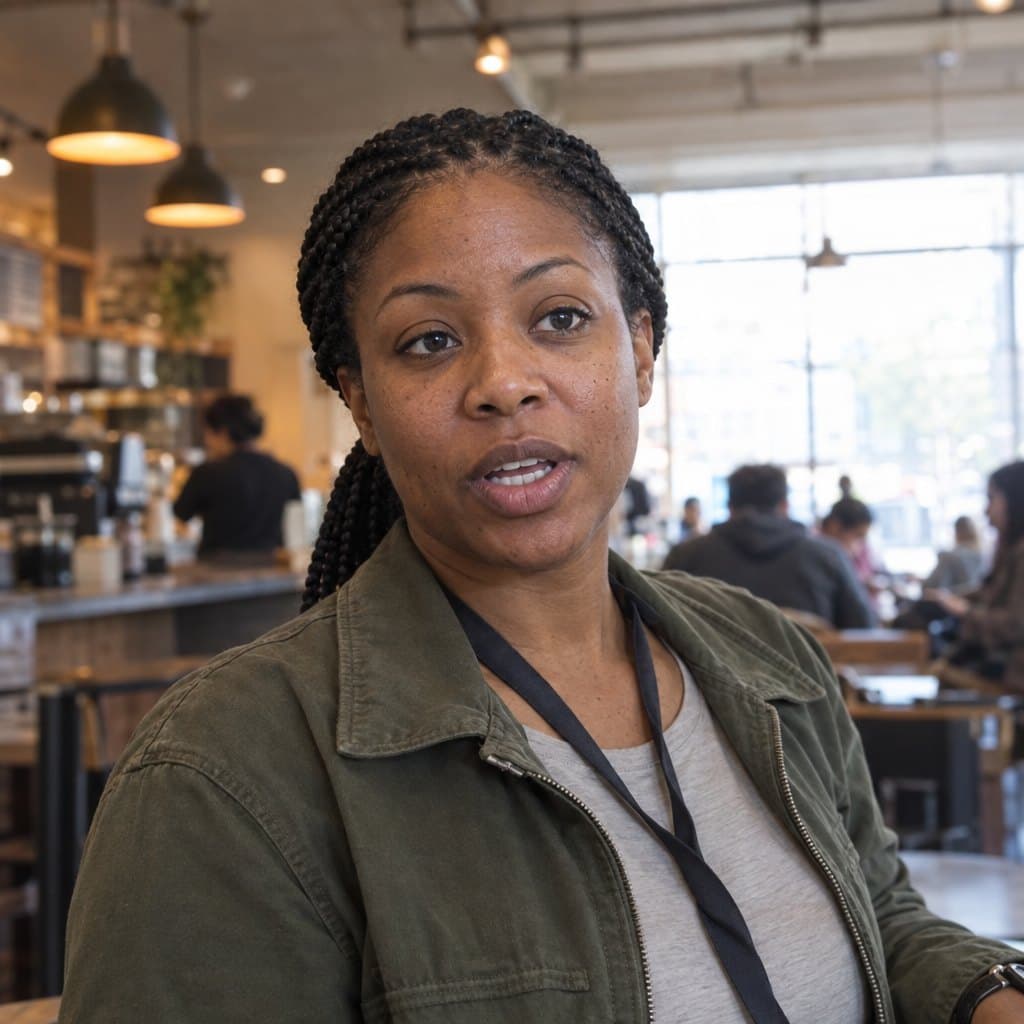 5 min freeBehind the counter
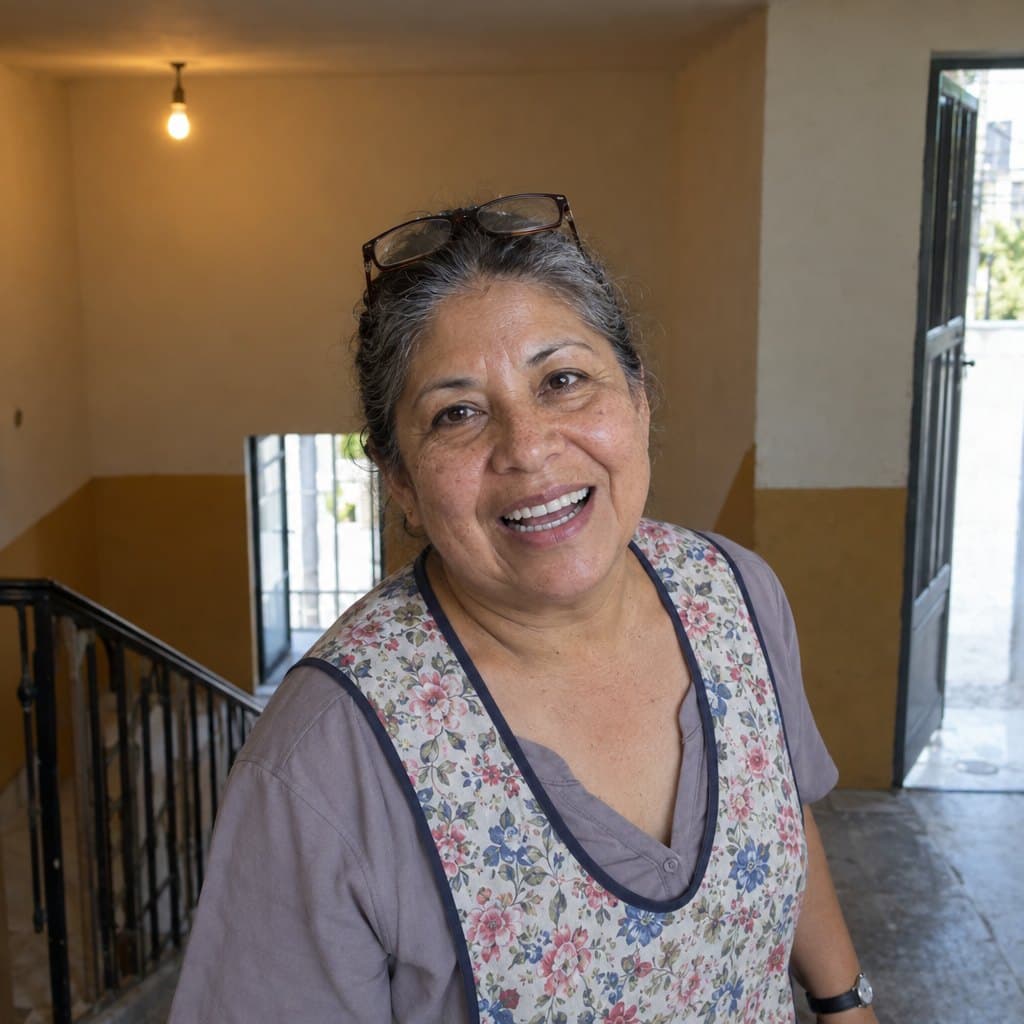 5 min freeNeighbours
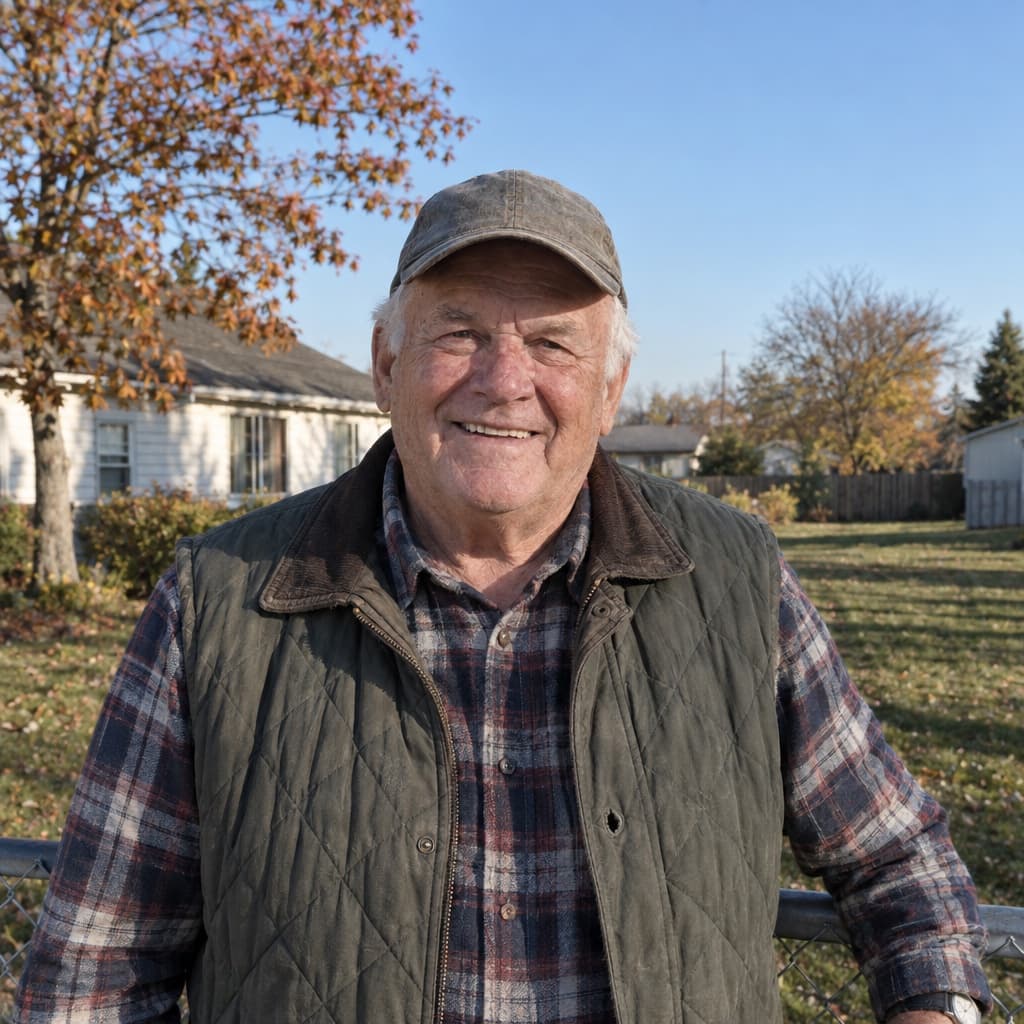 5 min freeNeighbours