 5 min freeBehavioral round


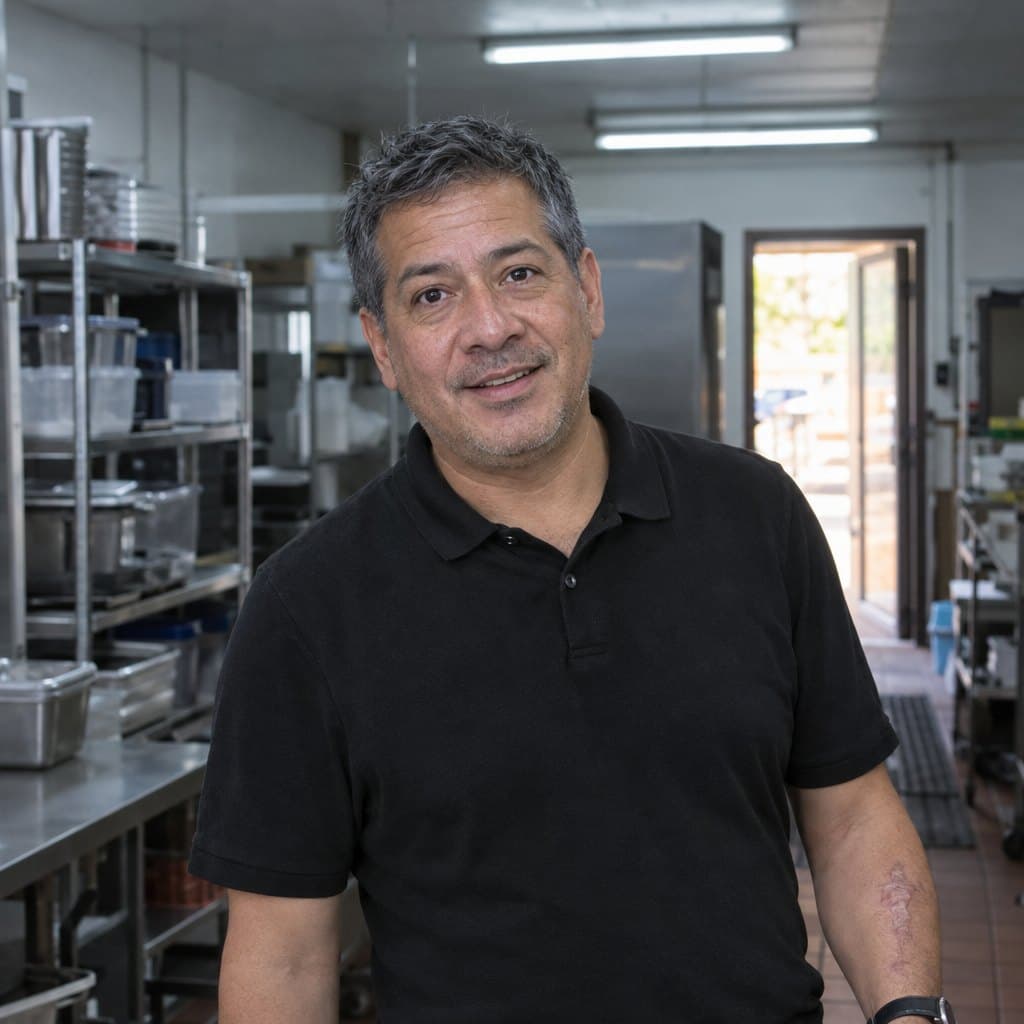
Marcus Chen
Engineering Manager, B2B SaaS
Runs rooms pitched at working fluency and confident fluency
American EnglishEither way. You pick before you start, from Austin, TXEvery time like the first
5.0(3)
From 15 min
A session of any length
First 5 minutes free
In Marcus’s words
Marcus manages eleven engineers and has hired most of them himself.
He takes notes on paper because a laptop between him and the candidate changes what people say. He asks the same three questions in every interview, a conflict, a failure, a change of mind, and has stopped being surprised by how many people cannot answer the second one. He is not trying to catch you out. He is trying to find out what you will be like on a bad Tuesday. Every time you say 'we', he will ask what you did. He does not mind silence while you think; he minds a rehearsed answer to a question he did not ask.
1min
They speak first, about a second after you press start. There is no press-to-talk and no waiting for your turn.
4min
Four minutes of the real thing, at the real pace, with the interruptions where a real one would put them.
1min
Your pace, your pauses and your filler words are counted within a second, and the score follows. Nobody asks for a card to hear it.
What a score from Marcus is worth
How the score is worked out here
Three things, and you can read what each one actually means. None of them turn this into an exam: talk to this person as often as you like, and the score is there only if you want it.
Run on Marcus
Cleared
Published criteria
The criteria and their weights are visible before you speak.
- Here
- Past behaviour as the predictor: real examples only, probed for the candidate's own decisions.
- Held by
- Published in advance; changes go through review
- Method
- Before you speak you can see what is being measured and how much each thing is worth, as percentages that add up to a hundred. That is checked automatically: a set whose percentages do not add up never reaches the site.
Situations and levels
What Marcus runs, and what a fortnight of it costs
A minute costs the same whoever you talk to: the expensive part is the model, not the person. Move the sliders to match the two weeks you actually have.
Situations
Difficulty
What it costs to rehearse this properly
Three runs across a week is what changes an answer. Move the sliders to your own plan. Nothing renews, and nothing is charged until you buy minutes.
- Minutes of talking in total
- 90
- The same conversations with a native speaker
- $300
- You save
- $260
- You pay
- $40
Ratings
What 3 people made of Marcus
Every one of them finished a conversation with Marcus before they could leave a rating. One conversation, one rating — the rule is in the database, not in a form. That is why the number under the stars means something.
5.0
3 ratings
- 53
- 40
- 30
- 20
- 10
Every one left after a session with Marcus
Marcus kept asking what I personally did, not what the team did. That exposed a weak interview habit in about five minutes.
After a session with Marcus
1 person has talked to Marcus, rated it and written about it. Ratings left through the product will join these, and only a finished conversation can leave one.
Compared with a live native speaker
7 conversations with Marcus for the price of one with a native speaker
Talking with a live native speaker is the best practice there is, and it is priced like it: from $50 a conversation, at a time that suits them. Here a conversation costs $6.60, starts when you press the button, and can be had again tomorrow.
A conversation with a native speaker
$50
A conversation here
$6.60
Nothing to book, and the same conversation can be had as many times as you like.
| A live native speaker | Reallang | |
|---|---|---|
| What one conversation costs | From $50 | $6.60 |
| When you can talk | When they have a slot | Now, or at six in the morning |
| Who is across the table | The same person every time | A recruiter, a doctor, a neighbour: 56 people |
| Will they interrupt you | Rarely. You are the one paying | Yes, like in real life |
| Feedback in writing | Usually none | 60 seconds later, quoting you |
| A real person across the table | Yes | No, an AI person |
The last row is the honest one: a real person is a real person, and nothing replaces that. But getting comfortable speaking takes dozens of conversations, not one a week at $50. Your teacher teaches you the language; this is the practice in between.
Start a session
Pick the meeting, and Marcus starts talking
There is no calendar, because there is nothing to wait for. Choose which conversation it is, allow the microphone, and a second later you are talking.
Which conversation are you having?
Marcus Chen runs 2 meetings. They are different conversations, not easy and hard versions of one, and each has its own criteria.
What counts as going well
Three stories with a shape, a number and your own decisions in them.
Tell Marcus Chen one or two things about your situation and the conversation will be about it.
0/280

Marcus Chen
American English · neutral
Every time like the first
How they speak
- The score
- 60 seconds after
- This one
- Free
- After that
- $6.60
- The first 5 minutes cost nothing and no card is asked for.
- We ask for your microphone before the conversation starts, never after.
- Audio is not stored. The written record of the conversation is, because the score quotes from it.
Also free the first time
Who to talk to after Marcus
Ranked against Marcus on whichever line you are choosing by. Save two or three and read them side by side.
- 5 min freeBehavioral round
 Behavioral round
 5 min freeYour first shift
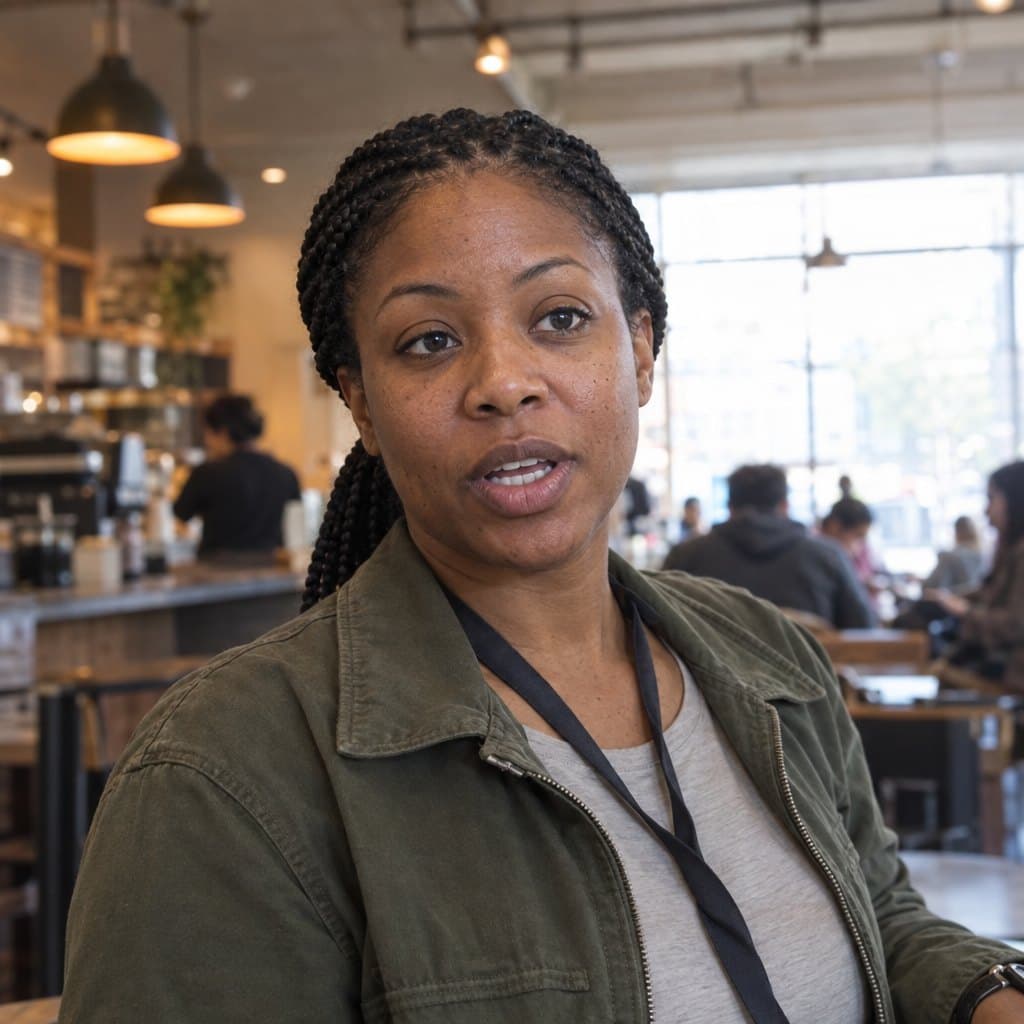 5 min freeBehind the counter